
Safe Recovery Environment: Caring for Your Cat Post-Sterilisation
Quick answer: Good recovery comes down to a few essentials: a quiet, warm indoor space, a cone (Elizabethan collar) to stop licking, keeping the wound clean and dry, limiting jumping and climbing, and giving pain relief as prescribed. Watch the incision for swelling or discharge, and bring your cat back for a wound check or […]
Quick answer: Good recovery comes down to a few essentials: a quiet, warm indoor space, a cone (Elizabethan collar) to stop licking, keeping the wound clean and dry, limiting jumping and climbing, and giving pain relief as prescribed. Watch the incision for swelling or discharge, and bring your cat back for a wound check or suture removal around 10 to 14 days after surgery.
The surgery is only half the journey: how your cat recovers at home over the next couple of weeks makes all the difference to a clean, comfortable healing. The good news is that most cats bounce back quickly, and the care needed is simple. Here is exactly what to do, and what to watch for.
Set up a quiet, safe recovery space
Before you bring your cat home, prepare a calm, warm, indoor area away from busy household traffic, other pets and young children. A single room or a large pen works well. Keep it on one level so your cat does not need to jump or climb, with food, water and a litter tray within easy reach.
Soft, clean bedding helps, and gentle warmth is welcome as anaesthetic can leave a cat feeling chilly at first. Keep your cat strictly indoors for the whole recovery period, outdoors means dirt, jumping, fights and lost wound checks.
Stop the licking: use the cone
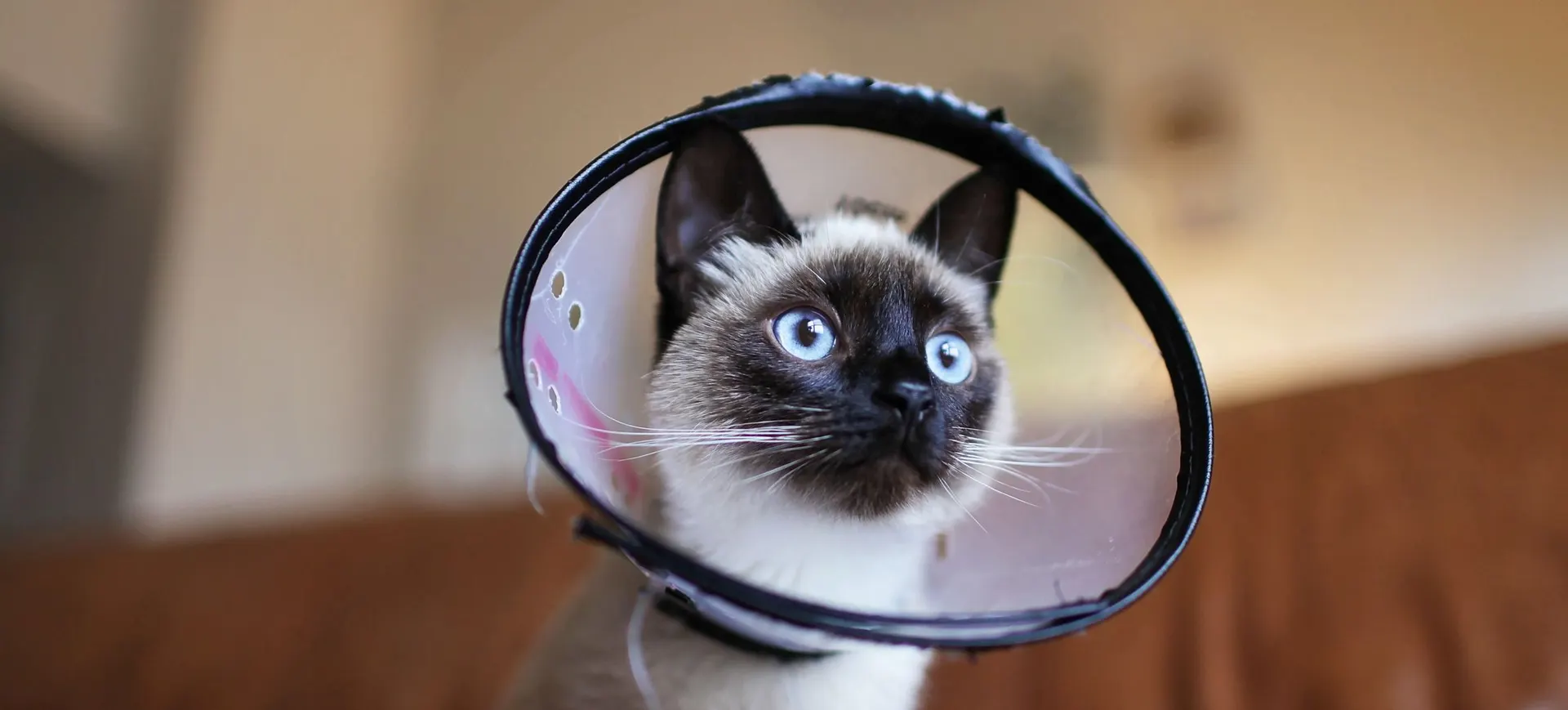
Cats instinctively lick wounds, but licking pulls at sutures, introduces bacteria and delays healing. An Elizabethan collar (cone) is the most reliable way to prevent this. Recovery suits or medical body-suits can be an alternative for some cats, ask your vet which suits your cat.
Keep the cone on as advised, including overnight when you cannot supervise. Cats often look comically miserable in a cone for a day or two, then adjust. It is far better than an infected or reopened wound.
Keep the wound clean and dry
Check the incision once or twice a day. It should look clean, with the edges together. Do not bathe your cat or clean the wound with anything unless your vet specifically tells you to: water and lotions can do more harm than good. Keep the litter tray scrupulously clean; for the first days, a dust-free or paper-based litter reduces the chance of fine particles sticking to the wound.
Limit activity, jumping and climbing
Even a bright, lively cat needs to take it easy. Vigorous activity, jumping onto furniture and climbing all strain the incision and can cause it to swell or open. Keep your cat confined and calm for the period your vet advises, typically the first week to ten days is the most important. Resist the urge to let an apparently lively cat free-roam too soon.
Pain relief and feeding
Give any pain relief exactly as prescribed: never give human painkillers, which are dangerous to cats. A comfortable cat heals and rests better. On the first evening, offer a small, light meal; appetite may be reduced straight after anaesthesia but should return within a day. Contact the clinic if your cat refuses food for more than about 24 hours.
Recovery do's and don'ts
| Do | Don't |
|---|---|
| Keep your cat indoors and confined | Let your cat outdoors or free-roam early |
| Use the cone / recovery suit as advised | Let your cat lick or bite the wound |
| Check the incision daily | Bathe the cat or clean the wound unless told to |
| Give pain relief exactly as prescribed | Give any human painkillers |
| Keep everything on one level | Allow jumping, climbing or rough play |
| Offer small, light meals at first | Worry about a slightly reduced appetite on day one |
| Call the vet if you are unsure | Ignore swelling, discharge or a reopened wound |
What to watch for, and when to call
Most recoveries are uneventful, but contact your vet promptly if you notice:
- Swelling, redness, heat or discharge at the incision, or the wound opening.
- Persistent lethargy, not eating for more than a day, or repeated vomiting.
- Pain, hiding or distress that does not settle.
- Your cat managing to lick or chew the wound despite the cone.
It is always better to call and check than to wait. You can read more about what was actually done during the operation in our step-by-step surgery guide.
Wound checks and getting back to normal
A wound check or suture removal is usually scheduled around 10 to 14 days after surgery. Some sutures dissolve on their own, but a check still lets the vet confirm everything has healed well. After that, your cat can gradually return to normal life. This is also the perfect time to set good feeding habits, since weight gain after neutering is easiest to prevent from the start.
We're here if you need us
If you have any concern during recovery, our team is happy to help. We provide cat spay and neuter surgery and aftercare at our Springleaf and Tampines clinics, open 7 days a week, with gentle ISFM Cat Friendly handling as an ISFM Silver Cat Friendly Clinic. Bring your cat in for that post-op check, and never hesitate to call if something does not look right.
Frequently asked questions
How long does a cat take to recover from sterilisation?
Most cats are noticeably brighter within a day or two, with the incision largely healed by around 10 to 14 days. Keep activity limited and the cone on for the period your vet advises.
Does my cat really need to wear a cone?
In most cases, yes. Licking is the leading cause of wound infection and reopening. A cone or a vet-approved recovery suit is the most reliable way to protect the incision.
Can my cat go outside while recovering?
No. Keep your cat strictly indoors throughout recovery to keep the wound clean and prevent jumping, fights and missed checks.
What if the wound looks swollen or my cat won't eat?
Contact your vet. Swelling, redness, discharge, an open wound, or refusing food for more than about a day all warrant a prompt call.
Medically reviewed by Dr Joyce Lauw, Veterinarian (University of Sydney, 2013); MANZCVS (Medicine of Cats); Certified Veterinary Acupuncturist, special interest in feline and internal medicine. Read Dr Joyce's profile
Last reviewed: October 2026. This article is general information and not a substitute for a consultation with your vet.
References / Further reading
- International Society of Feline Medicine (ISFM) - post-operative care guidance
- WSAVA - World Small Animal Veterinary Association
- AAHA - American Animal Hospital Association